Floors That Handle Daily Wear Without Full Refinishing
Hardwood Floor Screen & Re-Coat in Falls Church for scuffed surfaces showing minor scratches and dulled finish
Light surface scratches, scuff marks from furniture movement, and faded protective coatings reduce the appearance of hardwood floors that otherwise remain structurally sound. L P Restoration, LLC performs hardwood floor screen and re-coat services in Falls Church to restore shine and protection without the time and cost of full sanding. This process screens the existing finish to create adhesion for a fresh topcoat, addressing everyday wear while leaving the stain layer intact.
Screening removes the thin outer layer of finish using abrading equipment, preparing the surface for a new protective coating without cutting into the wood itself. The new topcoat seals the floor, adds gloss or satin sheen depending on preference, and guards against moisture and foot traffic. This approach works for floors where the finish has worn down but the underlying wood and stain remain in good condition.
Schedule a floor evaluation to determine whether screening and re-coating will meet your maintenance needs.
Why Screen and Re-Coat Extends Floor Life
The process begins with a condition assessment to confirm that the existing finish can accept a new topcoat and that the wood beneath shows no deep gouges or stain damage. Floors are thoroughly cleaned, then screened with equipment that abrades the surface evenly to ensure proper bonding. A durable protective coating is applied once the floor is prepped, filling minor surface imperfections and restoring a uniform appearance.
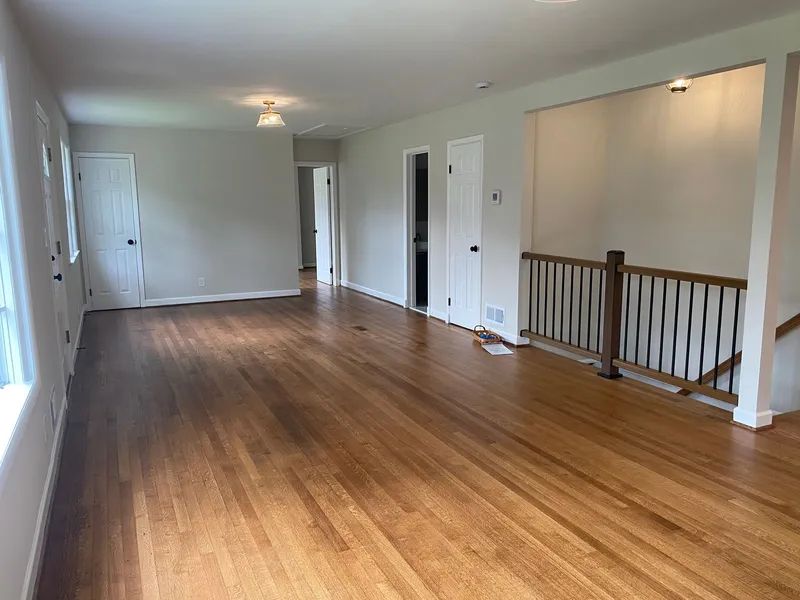
After the topcoat cures, floors regain their original luster and the finish protects against spills, scratches, and daily foot traffic. High-traffic areas like entryways and hallways show the most visible improvement, with scuff marks and dullness replaced by a smooth, reflective surface. The coating extends the time before full refinishing becomes necessary, often adding several years to the floor's functional life.
This service differs from refinishing because it does not involve sanding through to bare wood or restaining. Floors with deep scratches that penetrate the stain layer, water damage that has darkened the wood, or uneven wear patterns may require full refinishing instead. Evaluating the depth of existing damage determines which approach delivers the best result.
Questions Homeowners Ask Before Floor Maintenance
Floors that still look acceptable but have lost their protective sheen often benefit from screening and re-coating rather than waiting until damage worsens. These questions address common concerns about the process and when it applies.
How does screening differ from sanding?
Screening abrades only the finish layer using fine abrasive pads, while sanding removes finish and wood to reach bare material. Screening preserves the existing stain and requires less time, making it suitable for floors with surface-level wear that do not need color correction or deep scratch removal.
What determines whether a floor qualifies for screen and re-coat?
Floors must have an intact finish layer with no deep scratches exposing bare wood, no significant color variation from water damage or sun fading, and no structural issues like cupping or gaps. Falls Church homes with regularly maintained hardwood floors typically qualify if the finish has dulled but the wood beneath remains sound.
How long does the new topcoat take to cure?
Most protective coatings allow light foot traffic within 24 hours and full use including furniture placement after 72 hours. Humidity and temperature in Northern Virginia affect curing speed, with drier conditions accelerating the process and higher humidity extending it slightly.
What kind of protective coating is applied during re-coating?
Durable polyurethane or water-based topcoats designed for hardwood floors provide the final layer, selected based on the existing finish type and desired sheen level. These coatings resist household cleaners, pet traffic, and everyday wear better than older finishes that have thinned over time.
When should screening and re-coating be done again?
Floors in moderate-traffic areas typically need re-coating every three to five years depending on use patterns, cleaning habits, and protective measures like rugs or furniture pads. Regular maintenance prevents the finish from wearing through completely, which would then require full refinishing to restore protection.
L P Restoration, LLC evaluates each floor to recommend the maintenance approach that restores appearance and protection without unnecessary expense. Arrange an on-site assessment to review your floor's condition and discuss screening options.