Restoring Surfaces Without Full Replacement
Countertop & Kitchen Island Restoration in Falls Church for etched marble, stained granite, and scratched vanities
Kitchen islands and bathroom vanities develop concentrated damage around sinks, faucets, and cooktops where water, acids, and abrasive cleaning create etching, staining, and scratches that simple cleaning cannot remove. Restoring these surfaces involves detailed work around fixtures and edges where damage accumulates most visibly, using honing to remove the affected stone layer and polishing to restore the original finish. L P Restoration, LLC performs this restoration throughout Falls Church and Northern Virginia, helping homeowners refresh high-visibility surfaces without the expense and disruption of full countertop replacement. The process preserves the original stone while addressing years of surface wear and damage.
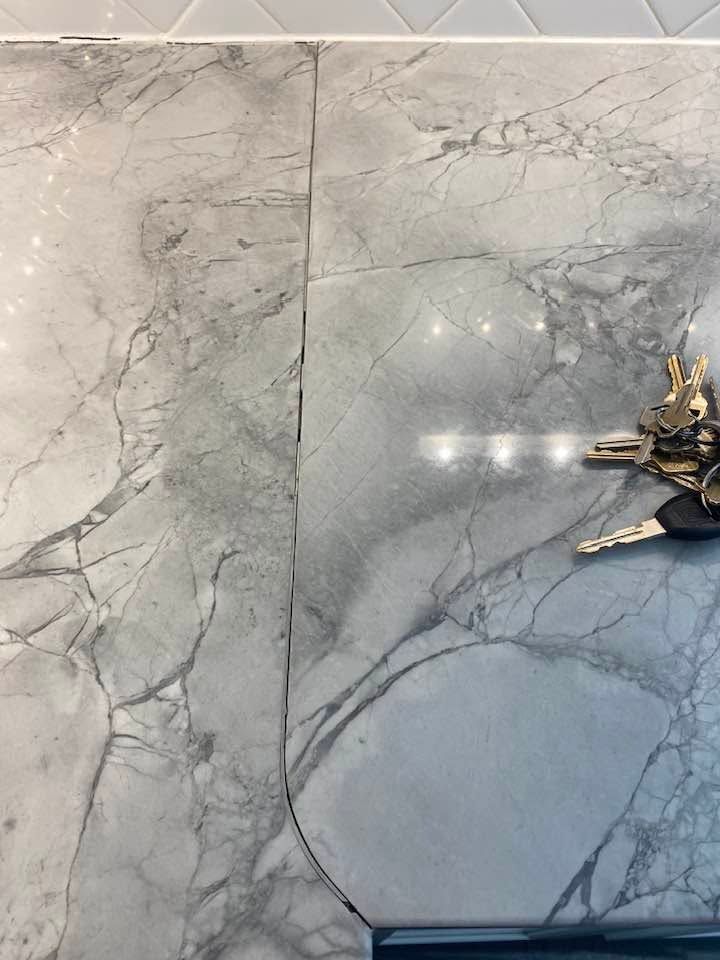
Countertop restoration requires careful attention to areas where etching from acidic foods has roughened marble, where knife scratches have dulled granite, and where hard water deposits have built up around faucets. Minor chips and edge damage receive repair before honing begins, ensuring a seamless appearance once the entire surface is polished to match.
Schedule a detailed evaluation to assess damage severity and determine which honing and polishing approach will restore your specific countertop material.
What You Notice Once Countertops Are Finished
Restoration removes the surface layer where scratches, etching, and stains have accumulated, grinding down to undamaged stone before refining the surface through progressively finer abrasives. Areas around sinks no longer show the rough texture of acid etching on marble or the dull rings where water evaporated and left mineral deposits on granite. Edges regain their smooth finish without the chips that previously caught on dish towels or created rough spots that snagged clothing.
The countertop reflects light uniformly after polishing, without the dull patches that developed in high-use areas or the visible scratches that caught light at certain angles. Sealing follows polishing to reduce how quickly spills penetrate the stone, giving you more time to wipe liquids before they absorb deeply enough to cause staining. This matters particularly for marble countertops where lemon juice, tomato sauce, and wine can etch or stain within minutes on unsealed surfaces.
Restoration around cooktops addresses heat discoloration and grease buildup that accumulates on granite, while vanity restoration focuses on toothpaste etching, cosmetic stains, and water damage common in bathrooms. Kitchen island restoration often involves more extensive edge repair because these surfaces experience impact damage from cookware and serving items that countertops against walls avoid. Each area requires assessment to determine how deeply damage penetrates and which repair methods will produce invisible results.
Questions Before Starting Your Project
Countertop and kitchen island restoration involves specific considerations that differ from floor restoration work.
What types of countertop damage can be restored effectively?
Surface scratches, acid etching, water rings, minor stains, and small edge chips all respond to professional restoration. Deep cracks that penetrate through the slab, severe heat damage that alters stone color permanently, and large missing sections typically require replacement rather than repair.
How does restoration work around sinks and faucets?
Technicians use smaller abrasive pads and detail work to hone and polish tight spaces around fixtures without removing them. This addresses the concentrated damage that occurs where water pools and cleaning products accumulate, matching the finish to surrounding countertop areas for a seamless appearance.
Why do marble countertops develop rough spots near food preparation areas?
Acidic foods like citrus, vinegar, and tomatoes chemically react with marble's calcium carbonate structure, dissolving the polished surface and leaving rough etching. This happens within seconds of contact on unsealed marble, creating dull patches that feel gritty compared to the smooth polished areas around them.
Can restoration remove all scratches from granite kitchen islands in Falls Church?
Honing removes scratches that do not penetrate deeper than a few millimeters into the stone. Very deep gouges from dropped cast iron cookware or knife cuts may remain faintly visible as texture even after polishing, though they become far less noticeable than before restoration.
How long does the restoration process take for a typical kitchen countertop?
Most countertop restoration completes in one day depending on surface area, damage severity, and how much edge repair is needed. Large kitchen islands with extensive etching or multiple damaged areas may require additional time for thorough honing and detail polishing around fixtures.
L P Restoration, LLC customizes countertop and kitchen island restoration based on the stone type, damage pattern, and finish preferences for each surface. Arrange an on-site assessment to review repair requirements and polishing options for your specific installation.