Floors Renewed Through Mechanical Refinishing
Hardwood Floor Restoration & Refinishing in Falls Church for scratched floors, discolored surfaces, and worn protective finishes
Years of foot traffic wear through polyurethane finishes on hardwood floors, exposing bare wood that absorbs dirt and moisture, leading to discoloration and surface damage that mopping cannot fix. L P Restoration, LLC restores these floors throughout Falls Church and Northern Virginia through professional sanding that removes the damaged top layer of wood, followed by staining and finish application that provides both appearance and protection. The process works for solid hardwood and certain engineered floors depending on wear layer thickness, renewing appearance while extending floor life without full replacement costs.
Restoration begins by evaluating wood thickness to confirm sufficient material remains for sanding, then removing old finish and surface damage through progressively finer abrasive grits. Stain application follows if color changes are desired, then multiple coats of durable polyurethane create the protective surface that shields wood from everyday wear.
Request a floor assessment to determine whether your hardwood has adequate thickness for refinishing and to review stain and finish options.
What Hardwood Restoration Actually Accomplishes
Professional sanding removes scratches, discoloration, and worn finish by grinding away the damaged wood surface, typically removing one-sixteenth to one-eighth inch depending on damage depth. This process eliminates the gray traffic patterns where finish wore away and exposed wood darkened from absorbed dirt, the scratches that accumulated from grit dragged across unprotected areas, and the surface gouges from furniture impacts or pet claws. Each abrasive grit refines the wood surface further, preparing it to accept stain evenly and ensuring finish adheres properly.
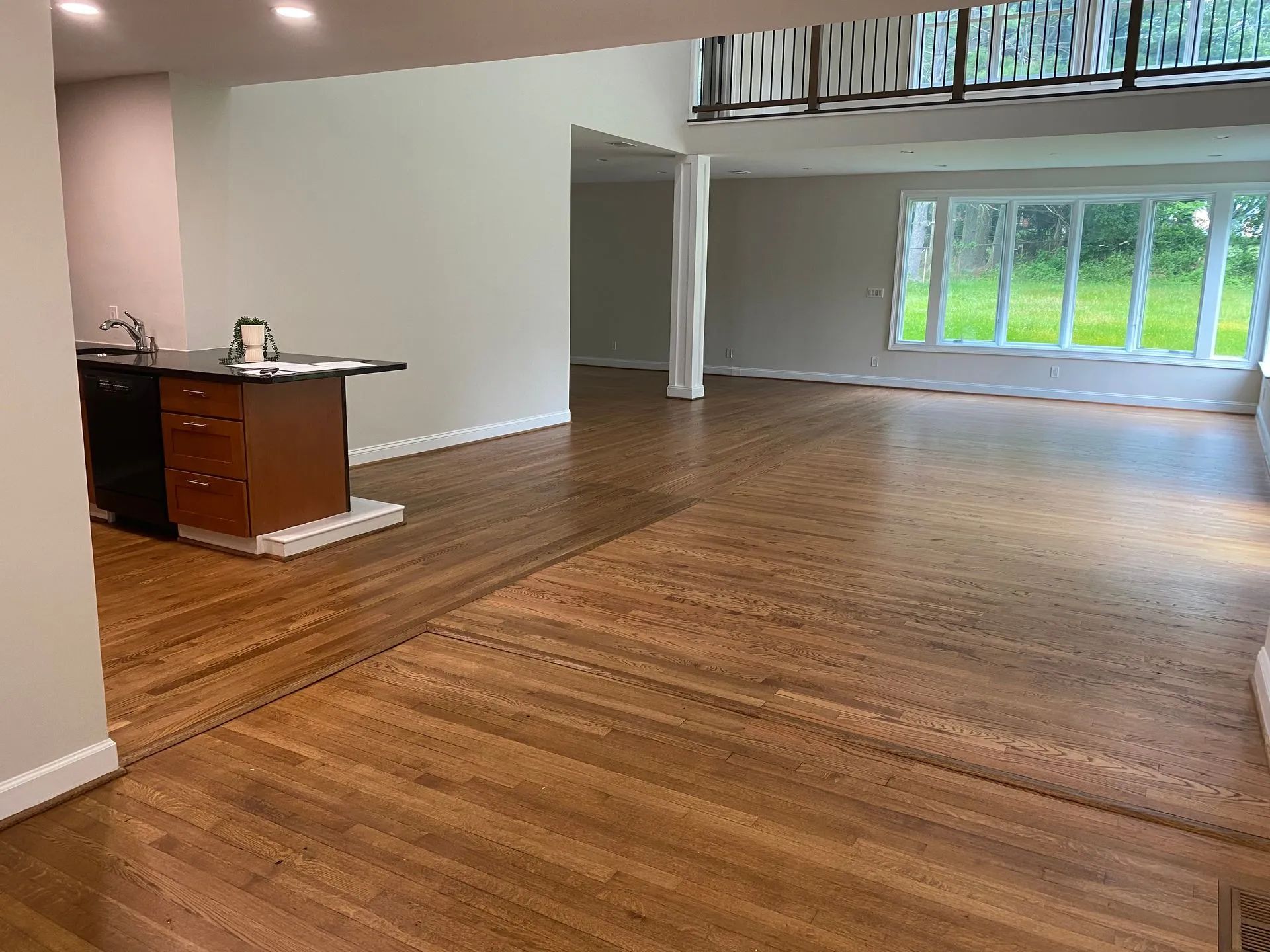
After refinishing, the floor displays consistent color without the dark patches where water or dirt penetrated bare wood, and the surface feels smooth without the rough texture of exposed grain or raised scratches. Polyurethane finish forms a clear protective layer that resists everyday residential traffic, preventing moisture absorption and reducing how quickly new scratches develop. The floor reflects light uniformly, and the wood's natural grain pattern becomes visible again without the obscuring layer of ground-in dirt that accumulated in unfinished areas.
Solid hardwood floors tolerate multiple refinishing cycles over their lifespan because the wear layer extends through the entire board thickness. Engineered floors have limited refinishing potential depending on their top veneer thickness—floors with thick wear layers support one or two refinishing cycles, while thin veneers cannot be sanded without exposing the plywood core beneath. Stain color selection depends on wood species, existing color, and desired appearance, with samples tested on inconspicuous areas before full application because different woods absorb stain at varying rates.
Answers to Frequent Service Questions
Hardwood floor restoration raises questions about process requirements and how refinished floors perform in Northern Virginia homes.
What preparation does hardwood refinishing require?
All furniture must be removed from the work area, and sanding generates fine dust that requires covering doorways and vents to contain it within the workspace. Most refinishing requires vacating the area during sanding and finish application due to dust, odor, and the need for proper ventilation while polyurethane cures.
How does sanding remove discoloration from water damage?
Sanding grinds away the wood surface where water penetrated and caused darkening, typically removing enough material to reach unaffected wood beneath. Deep water stains that penetrated beyond one-eighth inch may remain faintly visible even after sanding, requiring additional treatment or acceptance as part of the floor's character.
Why do polyurethane finishes last longer than some other options?
Polyurethane forms a hard, durable film on the wood surface that resists abrasion from foot traffic, moisture penetration, and everyday impacts better than penetrating oils or wax finishes. This durability makes polyurethane appropriate for high-traffic residential areas and commercial spaces where floors experience constant use.
Can refinishing match stain colors across different wood species?
Stain absorption varies by wood density and grain structure—oak absorbs stain differently than maple or pine, affecting final color even when using identical products. Sample testing determines how your specific floor responds to chosen stain colors, allowing adjustments before full application to achieve the closest match to desired appearance.
How long before refinished floors in Falls Church can handle furniture and foot traffic?
Polyurethane requires twenty-four to forty-eight hours before light foot traffic and seventy-two hours to one week before replacing furniture depending on temperature, humidity, and ventilation. Full cure takes several weeks, during which the finish continues hardening and developing its final durability and resistance to scratching.
L P Restoration, LLC evaluates each hardwood floor's condition and recommends sanding depth, stain options, and finish products based on wood type and intended use. Contact us to discuss refinishing feasibility and finish selection for your specific flooring installation.